
Diachasma alloeum
Summary
| Type |
organism
|
|---|---|
| Genus |
Diachasma
|
| Species |
alloeum
|
| Common Name |
Parasitoid wasp
|
| Genome Browser | |
| Description |
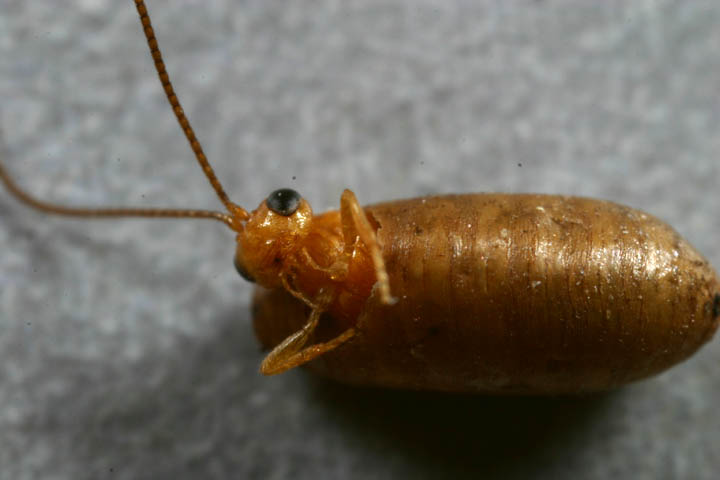
The parasitic wasp Diachasma alloeum (Hymenoptera: Braconidae: Opiinae), native to North America, attacks flies in the Rhagoletis pomonella (Diptera: Tephritidae) sibling species complex (Forbes et al. 2010). Wasps use olfactory cues to locate host fruit as the site for mating and oviposition of eggs into fly larvae (Forbes et al. 2009). The wasp larva consumes its fly host and overwinters in the fly puparium. The adult wasp emerges the following summer (Forbes et al. 2009). Evidence suggests that D. alloeum is undergoing ecological speciation via sequential divergence (Forbes et al. 2009; Hood et al. 2015); ecological speciation at one trophic level (the fly trophic level) appears to be inducing a similar speciation event at the adjacent trophic level (the parasitoid trophic level). The wasps show genetic, behavioral and physiological differences that reduce gene flow between host forms attacking different fly taxa. The D. alloeum genome will allow for investigation of questions relating to the generation of biodiversity and the cascading effects of speciation processes. Citations |
| Organism Image |
|
| Image Credit |
Copyright Andrew Forbes, University of Iowa
|
Assembly Stats
| Contig N50 |
NA
|
|---|---|
| GC Content |
39.52
|
| Scaffold N50 |
657,001
|
Other Information
| Community Contact |
I5k Workspace, USDA-ARS
|
|---|---|
| Links |
Analyses
| Name | Program | Status Sort descending |
|---|---|---|
| NCBI Diachasma alloeum Annotation Release 101 | NCBI Eukaryotic Genome Annotation Pipeline | Current |
| Diachasma alloeum genome assembly Dall2.0 (GCF_001412515.2) | SOAPdenovo v. 2.04; PBJelly v. July-2014 | Current |
| Functional annotation of NCBI Diachasma alloeum Annotation Release 101 | AgBase functional annotation pipeline | Current |
| Diachasma alloeum genome assembly Dall1.0 (GCF_001412515.1) | SOAPdenovo v. 2.04; PBJelly v. JULY-2014 | Current |
| NCBI Diachasma alloeum Annotation Release 100 | NCBI Eukaryotic Genome Annotation Pipeline | Supressed |